
The Future of AI Personal Assistants: Evolution, Advancements & Daily Impact
Introduction
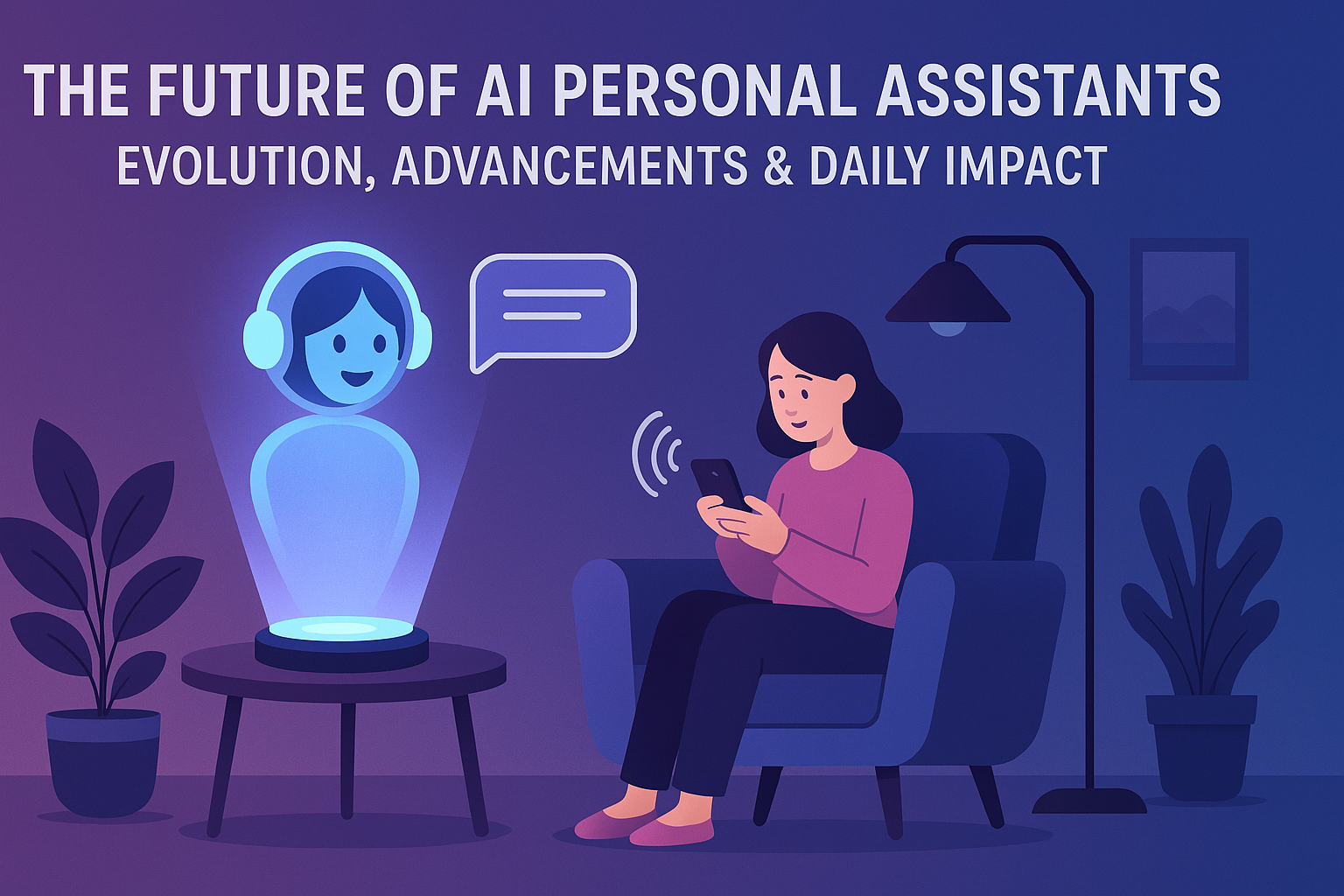
As Artificial Intelligence continues to evolve, AI personal assistants are increasingly embedded in our daily lives. From Siri’s early days to today’s sophisticated agents, these technologies are transforming how we communicate, work, and manage our world. This article explores their evolution, breakthroughs, and the profound impact they’ll have on our routines.
1. The Rise of AI Personal Assistants: A Brief History
- Siri (2007) introduced mainstream voice-controlled assistance.
- Alexa (2014) brought seamless smart home integration.
- Google Assistant (2016) enhanced natural language understanding.
- Initially limited to tasks like reminders or brief queries, their evolution now encompasses complex actions, personalization, and broader device integration.
2. Advancements in AI Personal Assistants
- Natural Language Processing (NLP):
AI assistants now navigate nuanced human speech with increasing fluency. - Machine Learning & Personalization:
They adapt to individual behaviors and preferences, learning over time. - Cross‑Device Integration:
From smartphones and wearables to smart appliances and cars—assistants form part of a seamless, connected ecosystem. - Emotional Intelligence:
AI is beginning to detect and respond to human emotions, offering more empathetic, tailored interactions.
3. Transformative Impact on Daily Life
- Boosted Productivity:
They manage calendars, emails, to-dos—letting you focus on what matters. - Healthcare Support:
Chatbot-driven reminders, tracking, and virtual counseling are already making headway—especially in patient engagement and mental health.
(WIRED, WIRED) - Home Automation & Comfort:
From adjusting lighting to curating entertainment, they create personalized environments. - Smart Recommendations:
Whether suggesting media or planning schedules, assistants refine suggestions based on your data and habits.
4. What’s Next: Challenges & Opportunities
- Data Privacy & Security:
As assistants access more personal data, encrypted and local processing becomes essential. - Bias & Fairness:
Ensuring fairness in AI decisions is critical for building and maintaining trust. - Job Displacement:
Automation could disrupt industries—but also offer new productivity-enhancing roles. - Accessibility & Inclusion:
Broader AI access promises empowerment for underserved communities. - Human Identity & Behavior:
There’s growing concern that over-dependence may erode empathy and human connection.
(WIRED)
5. In Summary
AI personal assistants are no longer novelty tech—they’re evolving into indispensable companions in both work and life. Their future lies at the intersection of powerful capabilities and thoughtful design, ensuring privacy, fairness, and humanity remain at the core.
Additional Resources
Explore further insights from these trusted sources:
- MIT Technology Review – “The future of artificial intelligence: trends, challenges, and opportunities”
NOTE: If MIT Tech Review doesn’t have this exact title, searching their site for “future of artificial intelligence” is recommended. - Wired – “Smarter AI Assistants Could Make It Harder to Stay Human”
Read how advancing AI assistants may influence human empathy and behavior.
(WIRED) - Harvard Health Publishing – “A.I.’s Promise for Women’s Health”
Explore how chatbots may support patient engagement and well-being.
(Harvard Health)
Recent Comments