
What Was the Translucent iMac?
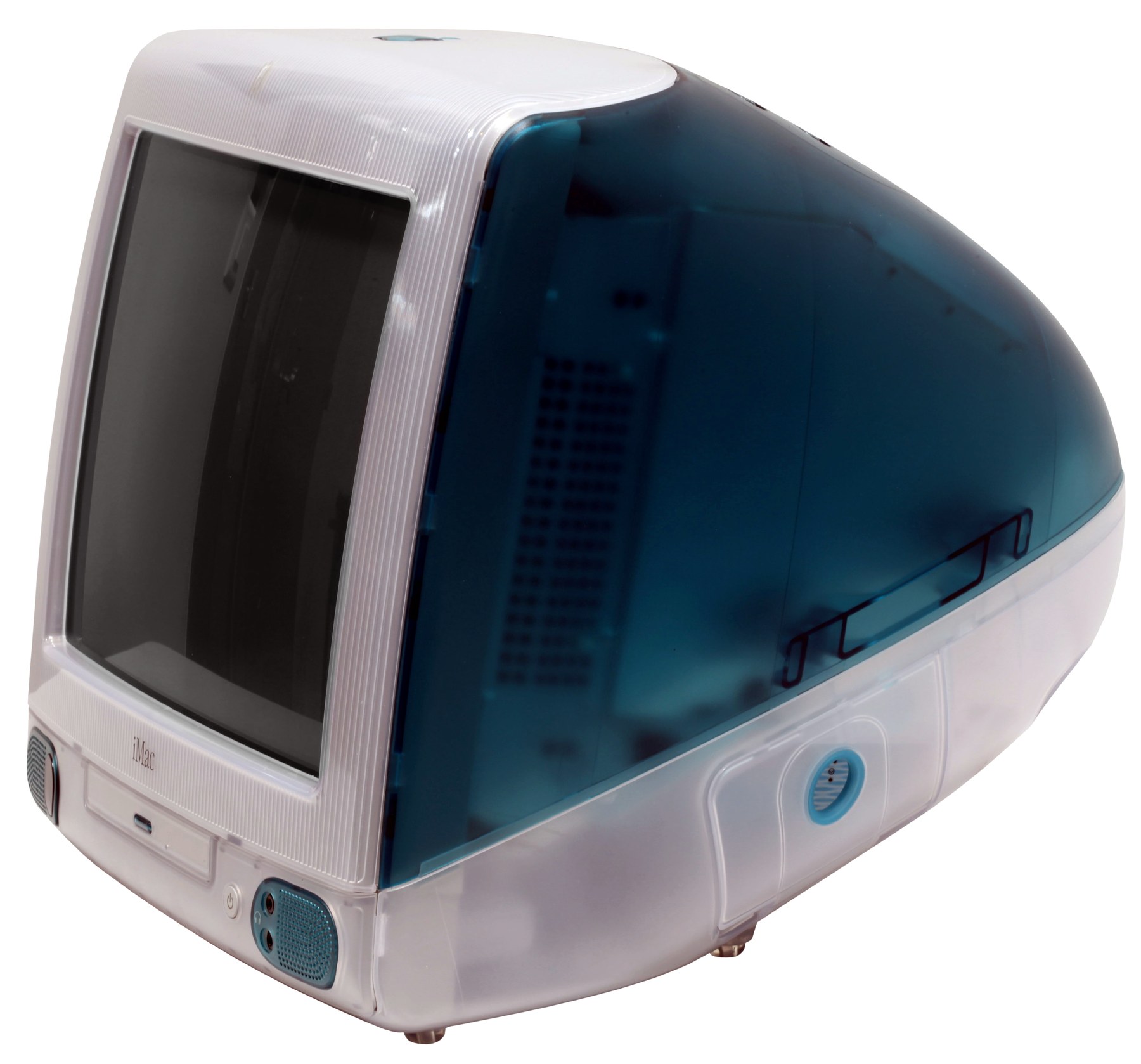
On May 6, 1998, Steve Jobs walked onto the stage of the Flint Center — the same auditorium where he had introduced the Macintosh fourteen years earlier — and pulled a cloth off a teardrop of translucent blue plastic. The iMac was the first computer sold on the argument that it should be looked at, the first big machine to ship without a floppy drive, and the product that took a company everyone had written off back into profit inside a single year.
The company on its back foot
To understand why a colored piece of plastic mattered, you have to understand 1997. Apple had lost more than a billion dollars the previous fiscal year, its stock was at prices not seen since 1986, the clone program that might have grown its software base had been strangled, and the product lineup was a thicket of dozen-plus models with names like Performa and Quadra that no retailer could explain. Jobs came back as interim CEO, took the Microsoft's fifteen million dollars and a kept Office promise, drew a simple two-by-two grid on a whiteboard — consumer or pro, desktop or portable — and cancelled most of the company. Four products would survive. The iMac was the first one, and everything Apple was about to claim about itself hung on that single box.
Design becomes a specification
The iMac was the work of Apple's industrial design office under Jonathan Ive, and it broke every unspoken rule of the industry at once. The case was translucent Bondi Blue, named for the Sydney beach, so you could see structure and shadow inside the machine, as if the engineering were jewelry. The whole computer was one piece: a 15-inch CRT nested in a shell no wider than a bread rack, with a CD tray in the front and, most famously, a molded handle in the top, because people kept asking for one and because a handle says pick me up to anyone trained to fear computers. There was no tower under the desk, no beige anything. The machine looked like furniture that had opinions.
The industry's reaction was disbelief, then imitation. Within a year every peripheral catalog was selling translucent blue and green gizmos; within two, color itself was a PC buying decision. The idea that a computer's appearance was a competitive specification — not a cosmetic afterthought — died with beige and was born, commercially, with this shell.
The port bet
The iMac's back panel was a statement disguised as a connectivity plan. There was one port for the old Apple mouse. The floppy drive — the medium personal computing had been stored on since 1981, seventeen years of data habits deep — was simply gone, sold as a seventy-nine dollar external accessory if you still needed it. In its place: two USB ports, a standard almost no peripheral supported and no Windows machine had embraced. USB was faster, hot-swappable, and self-configuring, but the iMac didn't adopt it because it was better; it adopted it because the machine was aimed squarely at first-time buyers who would never figure out DIP switches and IRQ conflicts, and Apple bet that the peripheral industry would follow a machine that sold a quarter of a million units in its first few months. The industry followed. Within roughly two years USB was the whole industry's answer, the floppy was dying, and Apple had spent a platform bet exactly once, at exactly the right moment.
Inside the plastic
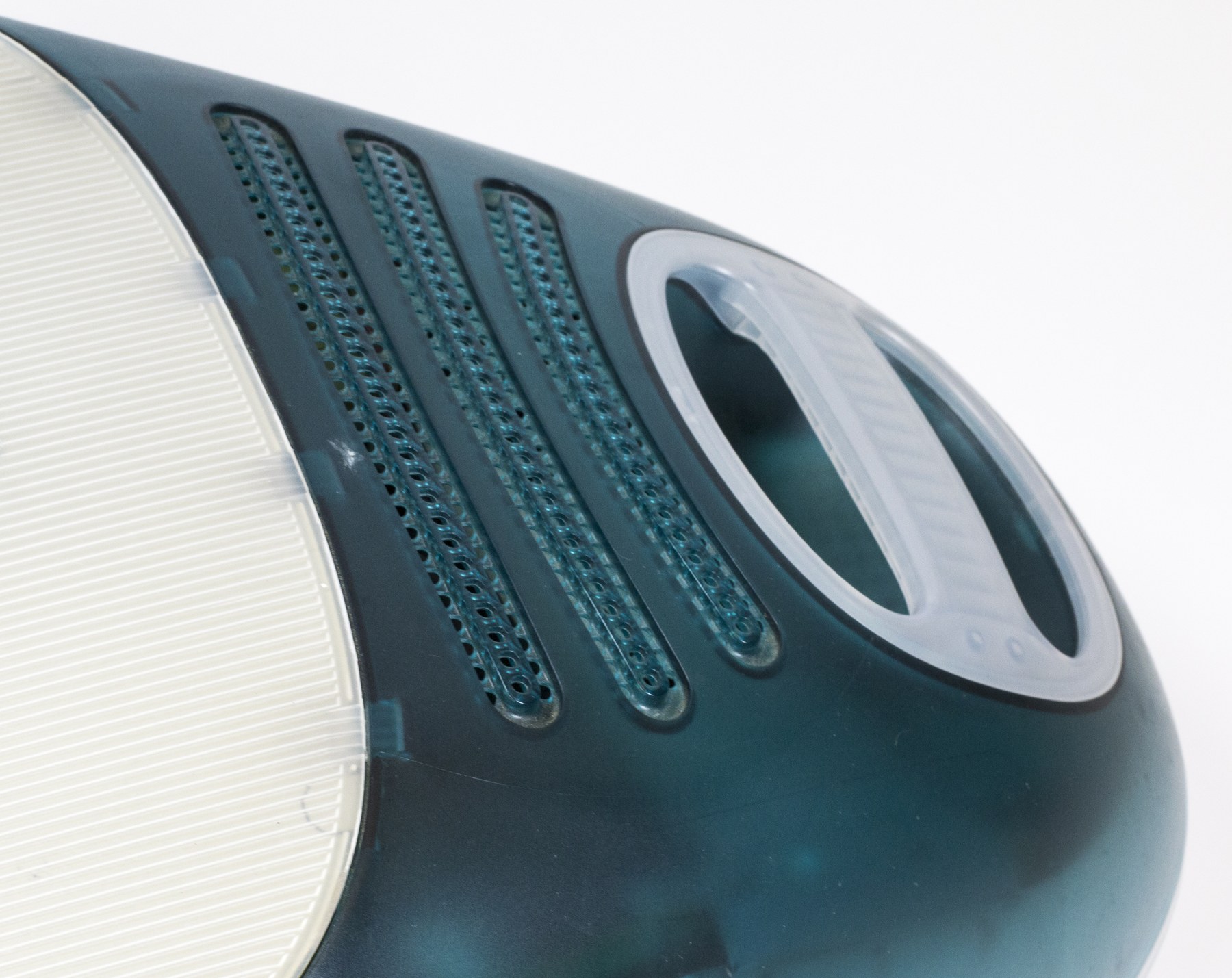
Underneath the furniture was a serious engine for its price. The 1998 iMac shipped at $1,299 with a 233 MHz PowerPC G3 — the RISC family whose cousins, Apple's marketers liked to note, flew in Boeing 777s — 32 MB of RAM, a 4 GB hard drive, and a graphics card on an AGP bus, which was a gaming-grade word at the price. Apple's launch advertisement quoted the comparison without apology: yes, it's true — the new iMac is faster than a 300 MHz Pentium II. The second hatch on the underside opened with a screwdriver to add memory, the only part of the machine the owner was meant to touch; everything else was sealed, appliance-tight. Mac OS 8 ran the show, and a RAM upgrade that a 486 owner did with a static strap and a prayer became a two-minute job a parent could do at the kitchen table.
The little i
The name explained the thesis: the i stood for internet. Every iMac shipped with a 56k modem in the box, a service provider's trial CD in the tray, and an Easy Setup assistant that walked a frightened adult through getting online before dinner — no computer-store clerk required. In 1998, when most American households still had no connection at all, that was the product, not the CPU. Apple marketed the iMac as an on-ramp: a machine you bought the way you bought a television, because it would connect you. The appliance thesis — a computer as a friendly, sealed, single-purpose-seeming object — was radical then and became the entire consumer electronics industry by 2010. Every sealed, unboxable, just-works device with a white cable that followed — starting with a little white square that plugged into headphones in 2001 — is the iMac's intellectual descendant.
The verdict came in fast
It sold in ways Macs had not sold in a decade: 278,000 units in its first few months, demand Apple's factories could not outrun, buyers putting down deposits months ahead. By that fall Apple had its first profitable year in two, and Time put the machine — not the company — on its year-end list as 1998's Machine of the Year. The Museum of Modern Art eventually put one in the permanent collection, which is a strange sentence for a computer and a perfect one for this computer. Jobs lived to see the comeback crest before his death in 2011, the iMac's grandchildren selling in the hundreds of millions; but every annual "one more thing" that began with pulling a sealed object out of an envelope started here, in blue plastic.
Why it still matters
Three legacies are still on your desk. Design as a buying decision — the reason a phone's finish starts a thousand think-pieces — started with a machine people bought for a color. The port purge: every laptop that ever shipped you off a connector "courageously" was running the iMac playbook, USB-C being its latest act. And the appliance itself — sealed, friendly, internet-first — which is the direct ancestor of every device you set up in ten minutes and never open. The beige tower taught a generation to open their computers; the blue one taught the next generation never to need to.
Frequently asked questions
Why did the iMac not have a floppy drive?
Apple judged — correctly, within a couple of years — that software and files had outgrown 1.44 MB and the internet was about to outgrow them too. The external floppy option let holdouts migrate while the machine itself pointed forward.
Was Bondi Blue really the only color?
For the first generation, yes — one color, and it made that color the brand. In 1999 Apple added six fruit colors ("Blueberry," "Tangerine," "Grape" and friends), which is when the rest of the industry began panicking about aesthetics.
Why "i"?
Internet, explicitly — Jobs listed internet, individual, and instruct as the intended readings at launch, but the modem in the box made the first one the point.
Did the iMac actually save Apple?
It saved the comeback. The company's survival by 1998 rested on the Microsoft investment and the cancelled product sprawl; the iMac is what turned survival into momentum, selling more than 800,000 units in its first year and putting Apple back in the consumer conversation permanently.
Key terms
- Bondi Blue
- The iMac's translucent blue shell, named after Bondi Beach in Sydney — the first time a computer's color name was as famous as its processor speed.
- All-in-one (again)
- A computer with the display built into the same case as the electronics. The 1984 Mac pioneered it; the iMac made it desirable.
- USB
- Universal Serial Bus — the plug-and-play port standard the iMac bet its back panel on, and which became the industry's default within about two years.
- ADB
- Apple Desktop Bus, the older daisy-chained mouse/keyboard port the iMac kept exactly one of — one port, one mouse, and the old world retired.
- PowerPC G3
- The IBM/Motorola/Apple RISC processor family at the iMac's heart — the performance argument against Pentium II at the same price.
- Slot-loading / tray-loading
- The first iMacs used a tray CD drive; 1999's redesign moved to slot-loading, which later defined Apple's whole design decade.
- Conformable color
- Apple's 1999 palette of six fruit colors for the iMac, turning a PC purchase into a taste decision and ending beige industry-wide.
- Shareware-to-apppliance arc
- The 1990s consumer path: open the tower for upgrades in 1993, pick a color instead in 1998 — the decade's whole consumer-computing story in one sentence.