What Is the Server Rack?
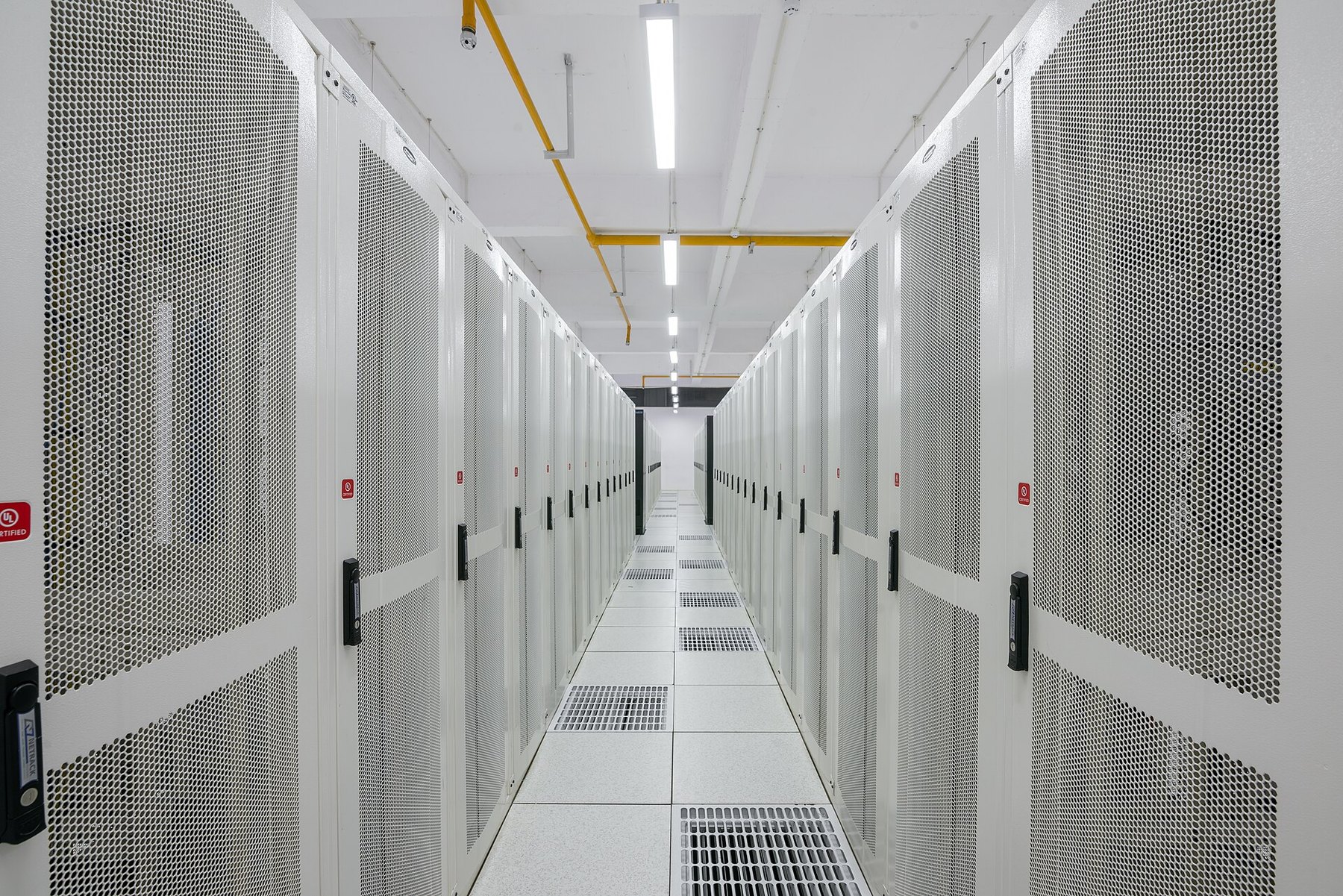
Every other machine in this series has a past-tense story. This is the exception — the rack did not die, it won, and it runs on a standard older than your grandparents’ phone bill. Ask a decade ago where your email lived and the honest answer was: a building. The great trick of 2010s computing was making a hundred million people stop asking — and the object that did it was not an app, an API, or a genius keynote. It was a steel cage of standardized holes, bolted to an industry standard from 1922, standing in a corridor of identical siblings in New Jersey, Virginia, or the scrubland outside Hyderabad.
The 19-inch time machine
Open the rack specification — EIA-310, the number hiding under "standard rack" — and you are not in a computer lab. You are in a Bell System telephone building in 1922. The industry's mounting width of 19 inches between rails descends from the frame AT&T standardized for its relay racks in the early 1920s; the 1.75-inch "unit" of height, the U every server still measures in, followed the same lineage, hardened during the World War II radio build-out because the Army had learned to mount its radio and switching gear where the telephone companies' patterns already fit. Mainframe cabinets, then minicomputer shelves, then the first rack-mounted web servers inherited the holes without ceremony. When you slide a server into a cloud data center today, your hands are repeating the motion of a 1923 telephone mechanic, and the bolt spacing proves it. This is the most underrated fact in infrastructure: the cloud is not built on the future's hardware. It is built on a utility's furniture.
The room that ate the computer
Through the 1990s, a "server room" was usually a closet: two tower boxes under a desk, a Windows NT license, a tape drive someone forgot to check, a sysadmin with a keyring. The web's growth broke that model twice over. First, cost: by the late 1990s, cheap Intel boxes on rails — the 1U and 2U rack servers — let a hosting company pack forty or fifty machines into a single frame, and the economics of real estate, cabling, and cooling started to reward density above everything else. Then came the inversion: 2006, Amazon opened S3 storage and EC2 compute to strangers, and the unit of computing became the metered slot in someone else's rack. Microsoft and Google arrived by 2010–2012 with the same idea at bigger scale. The year the flood crest passed is hard to date exactly, but by the mid-2010s the industry's defaults had flipped: startups ordered capacity instead of buying it, "on-prem" became a word legacy companies used apologetically, and every one of those millions of pocket computers from 2007 turned out to be a thin glass client talking to a rack it would never see.
What the rack actually is
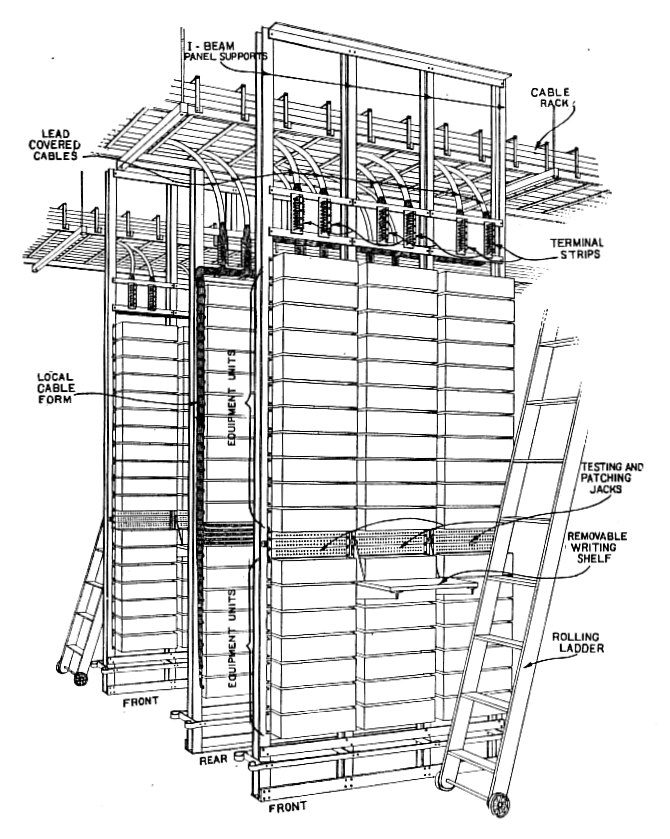
A modern rack is an argument about power and heat, dressed as furniture. Forty servers at a few hundred watts each is ten or twenty kilowatts in two cubic meters; the building's job stops being housing electronics and becomes moving air and water — hot aisles, cold aisles, sealed containment, raised floors above plenums of chilled air, chillers where cooling towers used to be a footnote. Scale that corridor into a warehouse, the warehouse into a campus, and the campus into a company: hyperscale. A major cloud provider runs on the order of millions of servers, which rewrites the buying economics — custom silicon, custom motherboards, custom power delivery, and a cost per watt no company with one closet can ever negotiate. This is why the rack era produced the decade's strangest inversion: the companies that looked like software companies (search, shopping, streaming, social) turned out to be utilities wearing websites. Your streaming service has more in common with a power company than a department store ever did, and it prices like one when capacity gets tight.
The exchange returns
Every feature of the cloud has a telephone-exchange ancestor the industry rediscovered with delight. Metered shared capacity: you did not own the switchboard, you paid by the call — 1913 did it, 2006 did it again. Reliability engineering: the phone company's "five nines" and its obsessively redundant plant are the great-grandparents of availability zones. Centralized intelligence, dumb endpoint: your telephone had no logic at all, and your phone is mostly an antenna for somebody else's rack. Even the economics rhymes: the Bell System's natural-monopoly logic reappeared as cloud network effects, the incumbents' comfortable margin reappeared in AWS's operating ratio, and the customer's quiet horror at dependence reappeared — with the same answer. The deregulators of the 1980s broke up one exchange monopoly; the antitrust hearings of the 2020s circled the new ones. The rack, it turns out, is a political object as much as a physical one: whoever owns the frames eventually owns the terms.
What the rack killed, and what it cost
The rack era killed the machine you knew personally. Server names stopped being pets and became cattle — operators stopped nursing boxes and started herding fleets; Docker arrived in 2013 and Kubernetes in 2014 because the job had become scheduling across ten thousand anonymous frames, not caring for one named one. The sysadmin with the keyring became the site-reliability engineer with a dashboard. And the invoice for convenience arrived on the same day: concentration risk — when one provider's control plane stumbles, banks, airlines, and governments sit down together; dependency terms set by someone else; a meter that never stops; and a physical footprint the grid has started to notice, as rack densities climbed from twenty kilowatts toward the hundred and beyond, and the AI campuses of the mid-2020s began showing up on utility load forecasts like weather. The cloud did not make computing immaterial. It moved the materiality somewhere you stopped looking.
Why it still matters
Because the rack is where everything you use actually is. Not metaphorically — physically: the frames, the rails, the bolt spacing, and the telephone standard from 1922 that ties all of it to the Demarest photograph above. The next era everyone is arguing about — the neural core, the AI plant — is arriving with the same architecture at greater voltage: rented compute in someone else's building, sold by the meter, mounted on the same 19 inches. When people say the cloud was a trick of language, they are half right. It was a trick of language performed with a hundred thousand buildings.
Frequently asked questions
Why is the rack 19 inches wide?
Because AT&T picked the rail spacing for its 1922 relay frames and every industry that followed — radio, military, mainframes, servers — mounted its gear to fit rather than fight. Nobody has seriously proposed a new width in a century; the holes won.
Is the cloud just someone else's computer?
That joke is the correct technical answer. The useful addition is someone else's — meaning someone who does five-nines engineering, buys silicon by the wafer, and negotiates power like a smelter. You are renting their specialization, and it is priced accordingly.
Why did blade servers mostly lose?
Blades (~2001) bet that stripping servers to boards shared in a chassis would beat full boxes on rails. Density was real; lock-in, churn cost, and the ordinary-ness of rack servers were not — and the hyperscalers, the biggest rack buyers alive, standardised on plain boxes in open containers. The chassis lives on inside their buildings wearing different clothes.
Does the 2015 date matter, or is it arbitrary?
Arbitrary-ish, and that's the story: no one day made the cloud. Between 2013 and 2016 the defaults flipped — cloud-first became the normal way new things got built, Netflix finished its migration, containers industrialized, and the on-prem server room entered its long institutional sunset. The timeline picks a year the way all periodization does: as a marker for where the argument changed sides.
Key terms
- EIA-310 / 19-inch rack
- The rack standard — 19 inches between mounting rails — inherited from 1920s telephone relay frames. The oldest living standard in your machine's ancestry chain.
- 1U / 2U
- Rack height in units of 1.75 inches: the width of a server, the furlong of data centers.
- Hot aisle / cold aisle
- Alternating rack orientation so cold air enters fronts and hot exhaust leaves backs. The rack era's core insight: the product is airflow.
- Hyperscale
- Providers big enough that their racks, chips, and power contracts are custom — where cloud economics stopped being server economics and became utility economics.
- EC2 / S3 (2006)
- The moment compute and storage became metered utilities you could order in minutes — the telephone company's business model, relaunched for the internet.
- Pets vs. cattle
- The ops culture shift of the rack era: stop nursing named machines (pets), start replacing anonymous fleet members (cattle). Docker and Kubernetes industrialized the mindset.
- Five nines
- 99.999% availability — the telephone plant's old promise, which became the cloud's marketing standard and, occasionally, its legal one.
- Concentration risk
- The rack era's bill: one provider's control-plane fault now cancels flights, banks, and headlines in the same minute. The exchange was fragile once too — operators just called them trunk failures.