
What Was The Tandy TRS 80?
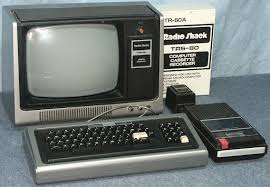
What Was the Tandy TRS-80?
Introduction
The Tandy TRS-80 was one of the most influential personal computers of the late 1970s. Understanding its history helps explain how computing moved from hobbyist workbenches into homes and small businesses — and how it shaped the early days of personal computing.
Released by Tandy Corporation through its Radio Shack stores in August 1977 at $599, the TRS-80 was among the first affordable, mass-produced, pre-assembled computers. Alongside the Apple II and the Commodore PET, it formed what Byte magazine famously dubbed the “1977 Trinity” — the machines that kicked off the personal computer revolution. Radio Shack’s thousands of retail stores gave the TRS-80 a distribution advantage no other computer company had ever enjoyed.
History and Development
The TRS-80 was designed in-house at Tandy. Radioshack engineer Steve Leininger built the concept and prototype, hardware designer Ralph Abegg developed the machine itself, and renowned hobbyist-engineer Bill Godbout consulted on the design. (It is sometimes claimed that MITS — the makers of the Altair 8800 — helped design the TRS-80. That is a persistent myth; MITS was Tandy’s competitor, not its partner.)
Tandy’s bet was on the retail channel: Radio Shack management expected to sell perhaps a few thousand units. Instead, roughly 10,000 orders arrived before the machine even shipped. The Model I launched with a Zilog Z80 processor and 4 KB of RAM, and the follow-on Model II (1979) added a proper operating-system and business-storage story, while the Model III (1980) and Model 4 (1983) refined the line for the business market.
Technical Specifications
For its era, the Model I offered a compelling package: a 1.77 MHz Zilog Z80 CPU, 4 KB of RAM standard (expandable to 48 KB), a built-in BASIC interpreter in ROM, and an integrated keyboard and monitor for the base price. Storage started on audio cassette tape; floppy disks arrived later via Tandy’s Trusted Computer System expansion.
The video display showed 64 by 16 characters and supported block “semi-graphic” characters, which is how early games and business charts got their visuals. A separately available 5-inch floppy drive, printer, and expansion interfaces rounded out the system.
Impact on Personal Computing
The TRS-80 proved you could buy a working computer at a neighborhood retail store, take it home, and have it run BASIC ten minutes later. That experience created an entire generation of programmers. Its built-in Microsoft BASIC and huge library of published program listings meant owners learned to type, save, and modify code as a matter of course.
It also built one of the most aggressive third-party ecosystems of the early microcomputer era: companies like Logical Systems, Softape, and Adventure International published TRS-80 software, and the machine became a stronghold for business applications, including VisiCalc after the Model II arrived.
Legacy and Collectibility
Today the TRS-80 is remembered as a symbol of early computing, alongside its 1977 siblings. Collectors value original units, and enthusiast communities keep the platform alive through emulation, replacement keyboards, modern floppy-disk emulators, and hardware upgrades.
Comparison with Later Models
Later home computers quickly surpassed the TRS-80 in graphics and sound, but the machine’s importance is undeniable. Its combination of retail availability, integrated design, and open BASIC made it a milestone in computing history — for many families, it was the first computer, full stop.
Conclusion
The TRS-80 demystified the computer. It showed that a personal machine could be an ordinary consumer product, and it trained the users and programmers who built the software industry that followed.
For more on the machines that built the modern world, or our services at Byte IT, visit our Computers category.
Frequently Asked Questions
Q: What does TRS-80 stand for?
A: “Tandy Radio Shack” — the “80” references its Z80 processor. (Tandy’s own marketing sometimes had it otherwise, but this is the widely accepted reading.)
Q: When was the TRS-80 released and what did it cost?
A: August 1977, at $599 — roughly $3,000 in today’s dollars, and far cheaper than the business machines it competed with.
Q: Was the TRS-80 designed by MITS?
A: No. It was designed at Tandy by Ralph Abegg, Steve Leininger, and consultant Bill Godbout. MITS, maker of the Altair 8800, was a competitor.
Glossary
- Z80: The 8-bit CPU designed by Zilog that powered the TRS-80, CP/M machines, and countless game consoles.
- The 1977 Trinity: Nickname given by Byte magazine to the TRS-80, Apple II, and Commodore PET, the three pre-assembled personal computers launched that year.
- Semi-graphics: Block characters that let text-mode machines like the Model I draw simple pictures and charts.
Recent Comments