
Using AI to Automate Monitoring, Anomaly Detection, Self-Healing Systems.
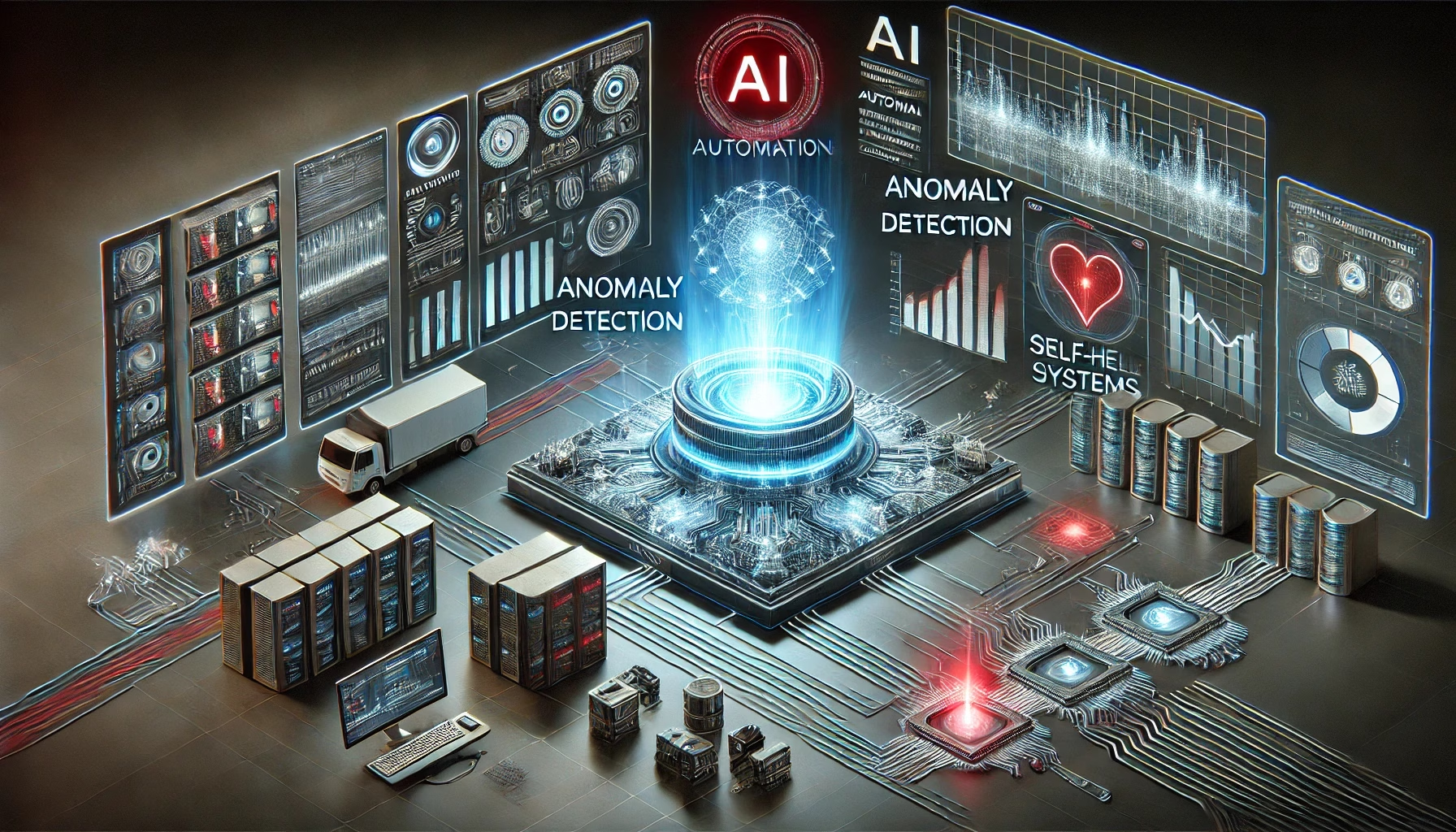
Using AI to Automate Monitoring, Anomaly Detection, Self-Healing Systems.
Introduction
AI has revolutionized the way we approach complex systems by enabling automation, anomaly detection, and self-healing capabilities. In this article, we will explore how AI can be used to automate monitoring, anomaly detection, and self-healing systems, with a focus on improving system reliability and reducing downtime. According to Gartner, AI is expected to play a crucial role in improving system reliability, with the ability to detect anomalies and take corrective action before they cause significant damage.
Benefits of AI-Powered Monitoring
AI-powered monitoring systems offer several benefits over traditional monitoring methods. These include improved accuracy, reduced false positives, and increased efficiency. Additionally, AI can help identify patterns and anomalies that may not be immediately apparent to human operators. According to Wikipedia, AI has been successfully applied in various industries, including healthcare, finance, and transportation.
How AI Can Automate Monitoring
AI can automate monitoring by continuously collecting data from sensors and other sources, analyzing it in real-time, and identifying potential issues before they occur. This allows for predictive maintenance, reducing downtime and improving overall system reliability. Therefore, AI-powered monitoring systems are an essential tool for any organization looking to improve its system reliability.
Anomaly Detection with AI
AI can detect anomalies by analyzing patterns in data and identifying deviations from expected behavior. This allows for early detection of potential issues, reducing the likelihood of downtime and improving overall system reliability. However, it’s essential to note that AI-powered anomaly detection requires continuous training and fine-tuning to ensure accuracy.
Self-Healing Systems with AI
AI can enable self-healing systems by continuously monitoring the system and taking corrective action when necessary. This allows for rapid recovery from failures, reducing downtime and improving overall system reliability. Additionally, AI-powered self-healing systems can learn from past experiences, improving their ability to detect and respond to potential issues over time.
Implementation Strategies
Implementing an AI-powered monitoring system requires careful planning and execution. It’s essential to choose the right tools and technologies for your organization’s specific needs, as well as to develop a comprehensive training program for your team. According to Datamation, AI implementation strategies should prioritize clear goals, realistic timelines, and ongoing evaluation and improvement.
Conclusion
In conclusion, AI-powered monitoring systems offer significant benefits over traditional methods, including improved accuracy, reduced false positives, and increased efficiency. By automating monitoring, anomaly detection, and self-healing capabilities, organizations can improve system reliability and reduce downtime. Therefore, it’s essential to consider implementing an AI-powered monitoring system in your organization today.
Recent Comments